- An ISO Certified Company
Wired vs Wireless Home Automation: Which Smart Home System Is Right for You?
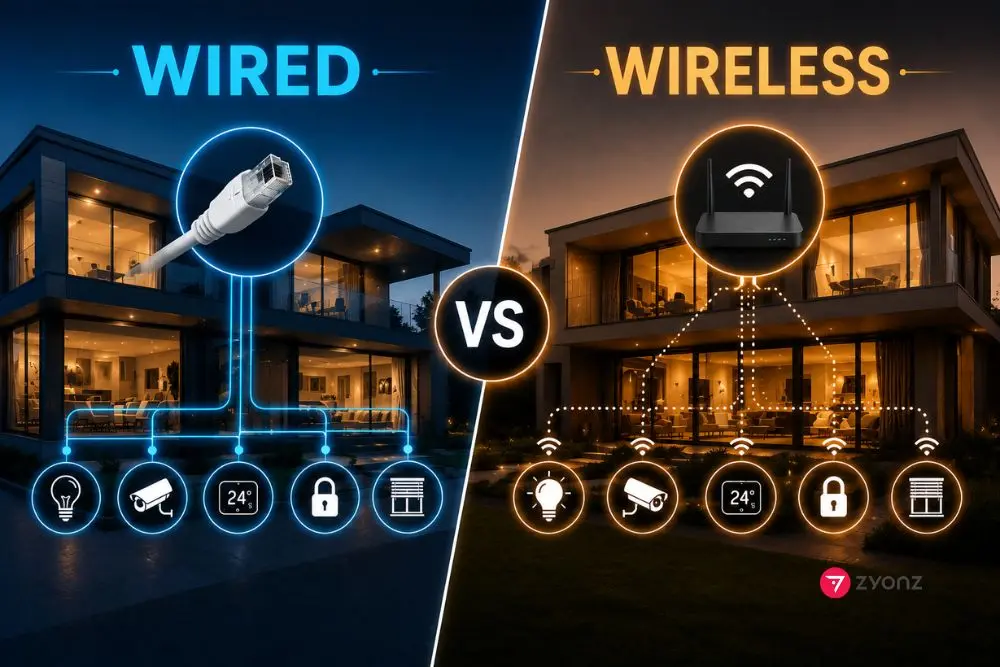
Smart home technology has transformed the way we interact with our living spaces. From controlling lights and air conditioning to managing security systems and entertainment, home automation offers greater comfort, convenience, and energy efficiency.
One of the first decisions homeowners face when planning a smart home is choosing between wired and wireless home automation. While both options can automate your home, they differ significantly in terms of installation, reliability, scalability, cost, and long-term performance.
This guide explains the differences between wired and wireless home automation systems, their advantages and disadvantages, and how to choose the right solution for your property.
What Is Home Automation?
Home automation is the integration of intelligent devices and systems that allow homeowners to control various functions from a smartphone, tablet, touch panel, or voice assistant.
A smart home can automate:
- Lighting
- Air conditioning (HVAC)
- Curtains and blinds
- Home cinema systems
- Multi-room audio
- CCTV cameras
- Smart door locks
- Video door phones
- Security alarms
- Energy monitoring
- Irrigation systems
- Garage doors
The communication between these devices can happen through either wired connections or wireless networks.
What Is Wired Home Automation?
A wired home automation system connects all smart devices using dedicated communication cables installed throughout the property.
These cables are typically integrated during the construction phase, allowing every device to communicate through a centralized network.
Wired automation is widely used in:
- Luxury villas
- New residential developments
- Commercial buildings
- Hotels
- Offices
- Large smart homes
Because the communication is physical rather than wireless, wired systems are known for their stability and long-term reliability.
Advantages of Wired Home Automation
Exceptional Reliability
Since devices communicate through physical cables, wired systems are not affected by Wi-Fi signal issues, interference, or network congestion.
This results in fast and consistent performance.
Faster Communication
Commands such as switching lights, adjusting climate control, or activating security systems are executed almost instantly.
Greater Stability
A wired system continues to perform consistently even when many devices operate simultaneously.
This makes it ideal for larger homes with extensive automation requirements.
Enhanced Security
Physical communication networks are generally less vulnerable to wireless hacking attempts.
Although cybersecurity is still important, wired systems offer an additional layer of protection.
Long-Term Durability
Professionally installed wired systems frequently work successfully for many years with little maintenance.
Disadvantages of Wired Home Automation
Despite its advantages, wired automation also has some limitations.
Higher Installation Cost
Installing cables throughout a property requires more planning, labour, and infrastructure.
Best During Construction
Retrofitting cables into an existing home may require wall modifications and additional construction work.
Longer Installation Time
Because wiring is installed before finishing the interiors, project timelines are generally longer.
What Is Wireless Home Automation?
Wireless home automation connects smart devices using technologies such as Wi-Fi, Zigbee, Z-Wave, Bluetooth, or Thread.
Instead of dedicated communication cables, devices communicate wirelessly through a home network.
Wireless systems are particularly popular for:
- Existing homes
- Apartments
- Rental properties
- Small villas
- Home upgrades
Many wireless devices can be installed without major renovation work.
Advantages of Wireless Home Automation
Easy Installation
Wireless devices can usually be installed quickly without opening walls or laying cables.
Lower Initial Cost
Installation costs are generally lower because there is less labour involved.
Flexible Expansion
Adding new smart devices is simple.
Homeowners can gradually expand their automation system as their needs change.
Ideal for Existing Homes
Wireless automation is an excellent solution for homeowners who want smart features without extensive renovation.
Portable Devices
Many wireless products can be moved or replaced easily if required.
Disadvantages of Wireless Home Automation
Wireless systems also have certain limitations.
Signal Interference
Performance may be affected by:
- Thick walls
- Long distances
- Network congestion
- Wi-Fi interference
Battery Maintenance
Some wireless sensors require periodic battery replacement.
Network Dependency
Many wireless systems rely on a stable internet or Wi-Fi connection for optimal performance.
Scalability Challenges
As more devices are added, network performance may decrease if not properly designed.
Wired vs Wireless Home Automation Comparison
|
Feature |
Wired Automation |
Wireless Automation |
|
Installation |
During construction |
Easy retrofit |
|
Reliability |
Excellent |
Very good |
|
Speed |
Very fast |
Fast |
|
Maintenance |
Low |
Moderate |
|
Initial Cost |
Higher |
Lower |
|
Expansion |
Planned upgrades |
Easy expansion |
|
Best For |
New homes & villas |
Existing homes & apartments |
|
Signal Issues |
None |
Possible |
|
Long-Term Performance |
Excellent |
Good |
Which System Is Better for Villas?
For newly constructed villas, wired automation is often the preferred choice.
Benefits include:
- Complete home integration
- Better scalability
- High reliability
- Luxury finish
- Long-term value
Since wiring can be installed during construction, homeowners avoid future renovation costs.
Which System Is Better for Apartments?
Wireless automation is usually the better option for apartments because:
- Installation is quick.
- No wall modifications are required.
- Devices can often be relocated.
- Initial investment is lower.
Many apartment owners start with smart lighting, smart locks, and climate control before expanding their system.
Can You Combine Wired and Wireless Automation?
Yes.
Many modern smart homes use a hybrid approach.
For example:
- Wired lighting control
- Wireless smart speakers
- Wired security systems
- Wireless sensors
- Wired home cinema
- Wireless smart appliances
This approach combines the reliability of wired systems with the flexibility of wireless devices.
Factors to Consider Before Choosing
Property Type
New construction projects benefit most from wired systems, while existing homes often suit wireless solutions.
Budget
Wireless automation generally has a lower upfront cost, while wired systems offer greater long-term value for larger properties.
Future Expansion
If you plan to automate your entire home over time, choose a system that supports future upgrades.
Internet Reliability
Although many smart devices continue functioning locally, reliable networking improves the overall user experience.
Professional Installation
Working with an experienced home automation provider ensures your system is properly designed, integrated, and configured.
Why Professional Installation Matters
A professionally installed automation system offers:
- Better device compatibility
- Reliable performance
- Neat cable management
- Proper system programming
- Stronger security
- Future upgrade options
- Ongoing technical support
Professional planning also helps to eliminate compatibility concerns between brands and technology.
Why Choose Zyonz Technologies?
Zyonz Technologies delivers customised smart home automation solutions for villas, apartments, and commercial properties across the UAE.
Our services include:
- Smart home consultation
- Wired home automation
- Wireless home automation
- Lighting automation
- Climate control
- Home cinema integration
- CCTV and security systems
- Smart door locks
- Multi-room audio
- Professional installation
- Maintenance and support
Whether you're building a new luxury villa or upgrading an existing apartment, our experts help you select the right automation solution based on your lifestyle, budget, and future requirements. We are also the best home cinema company in Dubai, UAE.
Conclusion
Both wired and wireless home automation systems offer excellent ways to create a smarter, safer, and more energy-efficient home. The right choice depends on your property's construction stage, budget, and future automation goals.
If you're building a new villa, a wired solution offers exceptional reliability, seamless integration, and long-term performance. If you're upgrading an existing home or apartment, wireless automation provides a cost-effective and flexible way to enjoy smart living without extensive renovations.
By consulting experienced automation professionals, you can choose a system that meets your current needs while remaining adaptable for future technologies.
Your Questions Answered
Explore our frequently asked questions to find answers to common queries about our in Dubai. If you can't find what you're looking for, feel free to contact us for further assistance.
 Categories