- An ISO Certified Company
Voice Assistants for Elderly Residents: Hands-Free Home Automation
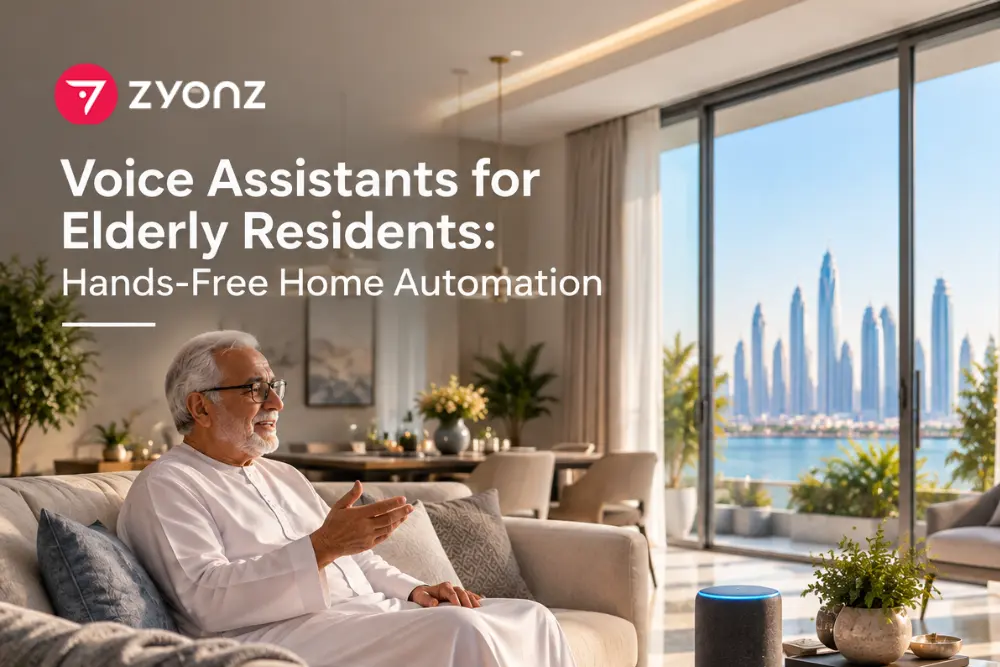
Imagine an elderly resident being able to turn on the lights, adjust the temperature, close the curtains, check the front door, or call a family member without reaching for a phone or walking across the room. A simple voice command can make these everyday tasks easier, safer, and less frustrating.
This is where voice assistants for elderly residents can make a meaningful difference. When connected with the right technology, voice control becomes more than a convenient feature. It can become an important part of an accessible and responsive home. For older adults, particularly those with limited mobility or difficulty using small buttons and touchscreens, hands-free control can remove several everyday obstacles. When voice technology is integrated properly, the home can respond naturally to the resident instead of requiring the resident to operate every device manually.
Why Voice Control Matters More as We Age
Many smart home features are designed around convenience, but accessibility is an equally important consideration. An elderly person may find it difficult to bend down to operate switches, reach a thermostat, carry a phone from room to room, or remember which application controls a particular device. Voice commands provide another way to interact with the home.
With a compatible setup, residents can use simple commands to control:
-
Lights and lighting scenes
-
Air conditioning and thermostats
-
Curtains and blinds
-
Television and entertainment systems
-
Door locks and selected access features
-
Security cameras
-
Music and radio
-
Kitchen appliances
-
Emergency or communication functions
The objective is not to make the home complicated. It is to reduce the number of physical steps required to perform routine activities.
How Voice Assistants Work With Home Automation
A voice assistant acts as a communication layer between the resident and connected devices. The user speaks a command, the assistant interprets it, and the relevant automation system carries out the action. For example, instead of walking to a switch at night, a resident could say that they want the bedroom lights turned on. Instead of searching for a remote control, they could ask the television to turn on.
A properly designed home automation system can connect multiple devices and allow them to work together rather than operating as isolated products. This distinction matters. Buying several smart devices does not automatically create a useful smart home. The devices need to communicate reliably, and the voice interface needs to be simple enough for the resident to use confidently.
Where Voice Assistants Can Make Daily Life Easier
Lighting Without Reaching for Switches
Lighting is one of the simplest and most useful applications. An elderly resident can use voice commands to switch lights on or off, adjust compatible lighting levels, or activate predefined scenes. This can be particularly useful during the night when walking around a dark room may increase the risk of trips or falls. Motion sensors can also complement voice control by automatically activating lights when someone enters a space.
Easier Temperature Control
Temperature settings can become surprisingly inconvenient when the thermostat is located away from the resident. Voice control allows residents to request temperature changes without getting up. A connected system can also use schedules and sensors to maintain comfortable conditions throughout the day. The result is a more responsive environment with less manual adjustment.
Entertainment Without Multiple Remotes
Television and audio equipment often involve several remotes, buttons, and input settings. Voice commands can simplify basic entertainment functions. Residents can ask for the television to turn on, adjust the volume, change compatible channels, or play music. For someone who finds conventional remotes difficult to operate, removing unnecessary buttons can make entertainment much more accessible.
Can Voice Control Improve Home Security?
Security is another area where voice-enabled technology can provide useful support. A resident may be able to check connected cameras, activate selected security routines, or receive information about doors and other monitored areas through a voice-enabled interface.
A properly integrated smart home solutions setup can also combine sensors, cameras, access control, lighting, and notifications so that different security components work together. For example, a resident could have a night-time scene that locks selected doors, switches off unnecessary lights, closes curtains, and activates appropriate security settings.
Voice Control and Door Security
Smart locks and access systems can reduce the need to manage traditional keys, although security settings should always be configured carefully. Voice commands should not automatically provide unrestricted access to sensitive functions. User authentication, device permissions, secure networks, and appropriate access rules remain important.
For households considering a home security system in Dubai, voice control should therefore be treated as one part of a broader security architecture rather than a replacement for professional security planning.
Kitchen Automation for Greater Convenience
The kitchen is another area where hands-free technology can be useful. Older residents may appreciate being able to control compatible lighting, blinds, ventilation, or other connected devices while preparing meals. Voice commands can also reduce the need to touch switches with wet or messy hands.
Thoughtfully planned kitchen automation should focus on practical routines rather than simply adding technology to every appliance. For example, one command could activate task lighting and ventilation while another could adjust the dining area's lighting for an evening meal.
The Benefits Go Beyond Convenience
The value of voice-enabled automation becomes clearer when viewed from the perspective of everyday independence.
1. Greater Independence
Simple tasks can be completed without asking another person for help. This can give elderly residents more control over their surroundings.
2. Reduced Physical Effort
Residents do not always need to walk across a room, reach for a switch, or search for a remote.
3. Easier Access to Technology
Voice interfaces can be easier to understand than applications filled with menus and icons.
4. Improved Night-Time Convenience
Lights, curtains, temperature controls, and selected security features can be operated without moving around unnecessarily.
5. Better Support for Caregivers
Connected systems can reduce the number of small tasks caregivers need to manage, while appropriate monitoring features can provide additional awareness when permitted by the resident.
What Makes a Voice-Controlled Home Truly Elder-Friendly?
Simply installing a voice assistant is not enough. The overall system needs to be designed around the resident. Keep commands short and consistent. Avoid creating dozens of complicated phrases that are difficult to remember.
It is also useful to create routines around common activities. A morning routine might adjust lighting and temperature, while an evening routine could prepare the home for bedtime. Reliability is equally important. If a system frequently fails to understand commands or devices stop responding, residents may quickly lose confidence in it.
Professional planning becomes particularly valuable in larger homes. A smart home Dubai installation may involve lighting, climate control, security, entertainment, networking, and multiple rooms, so these components should be planned as one connected system.
Expert Tips for Designing Voice Automation for Seniors
Start with daily routines. Identify the tasks the resident performs most frequently before choosing devices.
Use simple commands. Short, predictable commands are easier to remember.
Create scenes. Combine several actions into a single routine where appropriate.
Keep manual controls available. Voice control should add another option, not necessarily remove conventional switches.
Prioritize reliability. A smaller system that works consistently can be more useful than a large collection of poorly integrated devices.
Consider privacy. Review microphone settings, camera permissions, user access, and network security before deployment.
Provide basic training. Residents should know what commands to use and what to do if a device does not respond.
Common Mistakes to Avoid
One common mistake is installing too many smart devices at once. More technology does not automatically mean a better experience. Another is ignoring network infrastructure. Voice assistants and connected devices depend on reliable communication, so weak Wi-Fi or poorly planned networking can undermine the entire system.
Avoid complicated automation routines as well. If residents need to remember long or unusual commands, the technology becomes another source of frustration. It is also important not to treat accessibility as an afterthought. The height of switches, placement of control panels, visibility of status indicators, and availability of manual controls should all be considered during planning. Finally, security should never be overlooked. Voice-controlled devices can interact with doors, cameras, and other sensitive systems, so permissions and authentication need careful configuration.
Choosing the Right Home Automation Partner
The quality of the installation can have a significant impact on the experience. An experienced home automation company in Dubai should begin by understanding the resident's lifestyle, mobility requirements, daily routines, and priorities. The technology should then be selected around those needs.
A good installation should also allow room for future upgrades. Residents may initially need lighting and climate control but later decide to add security monitoring, motorised curtains, entertainment, or additional accessibility features.
The best approach is to create a system that feels natural rather than one that constantly reminds the resident that technology is running in the background.
A Smarter Home Should Also Be an Easier Home
Technology has the greatest value when it solves real problems. For elderly residents, voice control can remove small barriers that become significant over time. Turning off a light, adjusting the air conditioning, checking a door, or preparing the home for bedtime should not require complicated interfaces or unnecessary movement.
The goal of smart home automation is therefore not simply to add more connected devices. It is to create an environment that responds naturally to the people living inside it. At Zyonz, we design intelligent home environments around real lifestyles, combining automation, security, lighting, climate control, entertainment, and connected technology into practical solutions. If you are planning an elderly-friendly smart home in Dubai, speak with Zyonz to discuss a system designed for comfort, accessibility, and everyday ease.
Your Questions Answered
Explore our frequently asked questions to find answers to common queries about our in Dubai. If you can't find what you're looking for, feel free to contact us for further assistance.
 Categories