- An ISO Certified Company
Remote Home Monitoring: Keep Your Property Safe From Anywhere
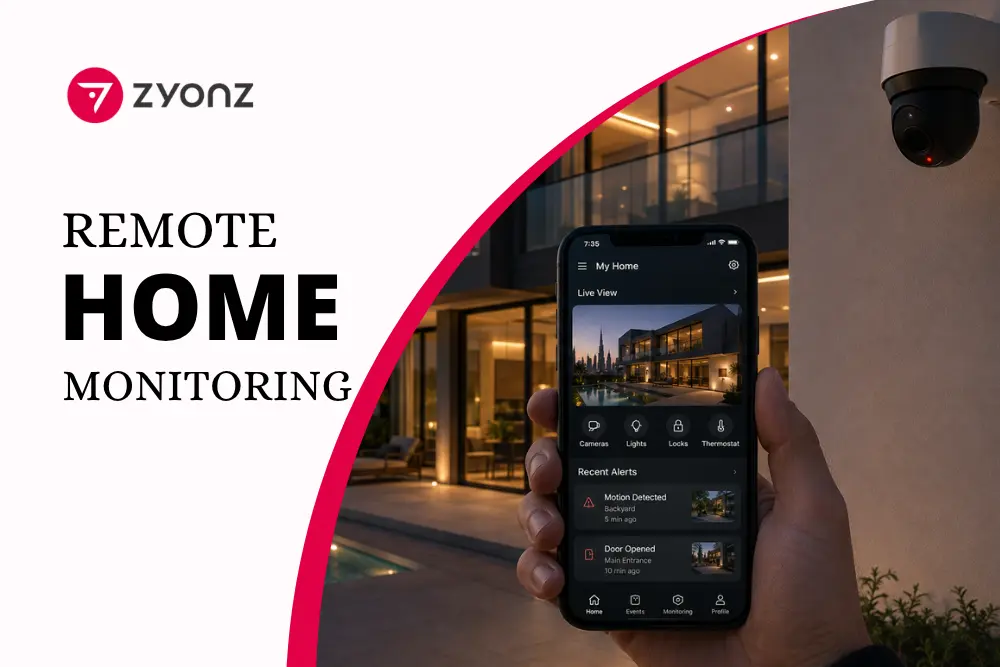
Your home does not stop needing protection when you leave the front door. In fact, an empty property can sometimes be more vulnerable because there is no one around to notice unusual activity, an open door, a water leak, or another unexpected problem.
This is where remote home monitoring can make a meaningful difference. Instead of relying only on traditional locks and alarms, modern technology allows homeowners to stay connected to their property from almost anywhere. With the right devices and a well-planned setup, you can check what is happening at home, receive alerts, and respond quickly when something needs attention. For homeowners in Dubai, where many people travel frequently or maintain multiple properties, remote monitoring can be a practical part of a modern security strategy.
What Is Remote Home Monitoring?
Remote home monitoring allows you to keep an eye on your property using connected security and smart home devices. These devices can include security cameras, motion sensors, door and window sensors, smart locks, video doorbells, smoke detectors, and other connected systems. The important part is connectivity. Instead of simply recording an event and leaving you to discover it later, a connected system can send information or alerts to your smartphone or another authorised device.
For example, imagine receiving an alert while you are at work saying that motion has been detected near your entrance. You can open the security camera feed, check what is happening, and take the appropriate action. This gives homeowners greater awareness without requiring them to physically be at the property.
Why Is Remote Monitoring Becoming More Important?
Homes are becoming increasingly connected. Security cameras, lighting, locks, sensors, entertainment systems, and climate controls can now communicate through a single connected environment. This development has changed how homeowners think about security. A traditional security system may protect your property when an alarm is triggered. A connected monitoring system can provide information before, during, and after an event.
Some of the biggest advantages include:
-
Real-time security alerts
-
Remote access to cameras
-
Monitoring of doors and windows
-
Smart lock control
-
Motion detection
-
Detection of smoke or unusual environmental conditions
-
Greater visibility when travelling
-
Integration with other smart home devices
The goal is not simply to add more technology. It is to create a system that helps you understand what is happening at home and respond when necessary.
How Does Remote Home Monitoring Work?
A typical setup combines several connected devices with a central control platform or mobile application.
1. Security Cameras
Cameras provide visual information about your property. Depending on the system, you may be able to view entrances, driveways, living areas, gardens, or other important locations remotely. Modern cameras can also offer features such as night vision, motion detection, two-way audio, and intelligent notifications.
2. Door and Window Sensors
These small devices can detect when a door or window is opened or closed. If an unexpected opening occurs while you are away, the system can send an alert. This is particularly useful for ground-floor entrances, balconies, garages, and other access points.
3. Motion Sensors
Motion sensors can identify movement in selected areas. When properly positioned, they can help detect unusual activity without requiring cameras in every part of the property.
4. Smart Locks
Smart locks can add another layer of control. Depending on the system, homeowners may be able to lock or unlock doors remotely, create temporary access permissions, or review access activity.
5. Mobile Notifications
The mobile application is often the most convenient part of the system. Instead of checking cameras constantly, you can receive notifications when something requires your attention.
Remote Monitoring Is More Than Watching Security Cameras
One common misconception is that monitoring simply means viewing CCTV footage from a smartphone. In reality, a properly designed system can do much more. Consider a homeowner who is away for several weeks. A smart sensor detects an unexpected entry. The homeowner receives an alert, checks the camera, and can immediately contact a family member, building management, or security personnel.
Another example involves a water leak. A connected sensor detects unusual moisture and sends an alert before the problem develops into significant property damage. This broader approach makes remote home monitoring useful not only for preventing security incidents but also for improving awareness of potential problems around the property.
How Home Automation Makes Monitoring Smarter
Monitoring becomes even more useful when it works alongside home automation. Instead of treating every device as a separate system, homeowners can create automated responses based on specific events.
For example:
-
Motion detected at night can trigger outdoor lighting.
-
An unauthorised door opening can trigger an alarm and send a phone notification.
-
A smart lock can automatically secure selected doors at a scheduled time.
-
Cameras can begin recording when motion is detected.
-
Lights can be programmed to create the appearance that someone is home.
These interactions can make a property more responsive while reducing the number of tasks homeowners need to manage manually.
Choosing the Right System for a Dubai Home
Dubai properties can vary significantly, from apartments and villas to large private residences. That means there is no single monitoring setup that works for every home. When evaluating a home security system in Dubai, consider the property layout, entry points, lifestyle, and specific risks you want to address.
A practical assessment should consider:
-
Property size: Larger properties may require more sensors and cameras.
-
Access points: Identify doors, windows, garages, and other potential entry areas.
-
Internet reliability: Connected devices depend on stable communication.
-
Camera placement: Avoid blind spots around important areas.
-
Privacy: Cameras should be positioned responsibly and securely.
-
Mobile access: Make sure the system offers convenient remote control.
-
Future expansion: Choose a system that can accommodate additional devices later.
A professional assessment can help prevent a common mistake: installing devices based on convenience rather than actual security requirements.
What Should You Look for in a Smart Monitoring System?
The quality of the installation and system design matters just as much as the individual devices. When comparing smart home solutions, look beyond the number of features advertised. Focus on how well the components work together.
Look for:
-
Reliable connectivity
-
Secure user authentication
-
High-quality cameras
-
Useful mobile alerts
-
Easy-to-use controls
-
Remote access
-
Device compatibility
-
Expandability
-
Professional installation and support
You should also consider how alerts are presented. Receiving dozens of unnecessary notifications can quickly become frustrating. A well-configured system should provide useful information without overwhelming the homeowner.
Why Professional Installation Matters
Smart security equipment may appear easy to install, but positioning and configuration can have a major impact on performance. A camera pointed at the wrong angle can leave an entrance uncovered. A motion sensor placed incorrectly may generate repeated false alerts. Devices from different manufacturers may also have compatibility limitations.
Working with a professional home automation company in Dubai can help ensure that the system is planned around the actual property rather than simply based on a list of devices. Professional installation can also help with configuration, device integration, network considerations, user permissions, and future upgrades.
How to Make Remote Monitoring More Secure
Connected security systems should themselves be protected carefully.
Follow these basic practices:
-
Use strong, unique passwords.
-
Enable multi-factor authentication where available.
-
Keep devices and applications updated.
-
Limit system access to trusted users.
-
Review connected devices regularly.
-
Secure your home Wi-Fi network.
-
Remove access permissions that are no longer required.
-
Avoid using default login credentials.
Security is not finished when the equipment is installed. Regular maintenance and responsible access management are equally important.
What Does the Future of Smart Home Security Look Like?
The connection between security and automation is likely to become increasingly sophisticated. Artificial intelligence, improved sensors, smarter cameras, and integrated control platforms are making systems more capable of identifying unusual activity and delivering more relevant alerts.
The role of smart home automation Companies is therefore moving beyond individual devices. The focus is increasingly on creating connected environments where security, convenience, and energy management work together.
For homeowners, the most useful technology will not necessarily be the system with the largest number of features. It will be the one that solves genuine problems, works reliably, and remains easy to manage.
Secure Your Home With Zyonz Technologies
Looking to make your Dubai home safer, smarter, and easier to manage from anywhere? Zyonz Technologies provides smart home and security solutions designed around the way you live. From connected surveillance and access control to integrated automation, the right system can give you greater visibility and control over your property.
Get in touch with Zyonz Technologies today to explore a customised smart home monitoring solution for your property.
Your Questions Answered
Explore our frequently asked questions to find answers to common queries about our in Dubai. If you can't find what you're looking for, feel free to contact us for further assistance.
 Categories