- An ISO Certified Company
HVAC Building Automation Systems for Smart Climate Control
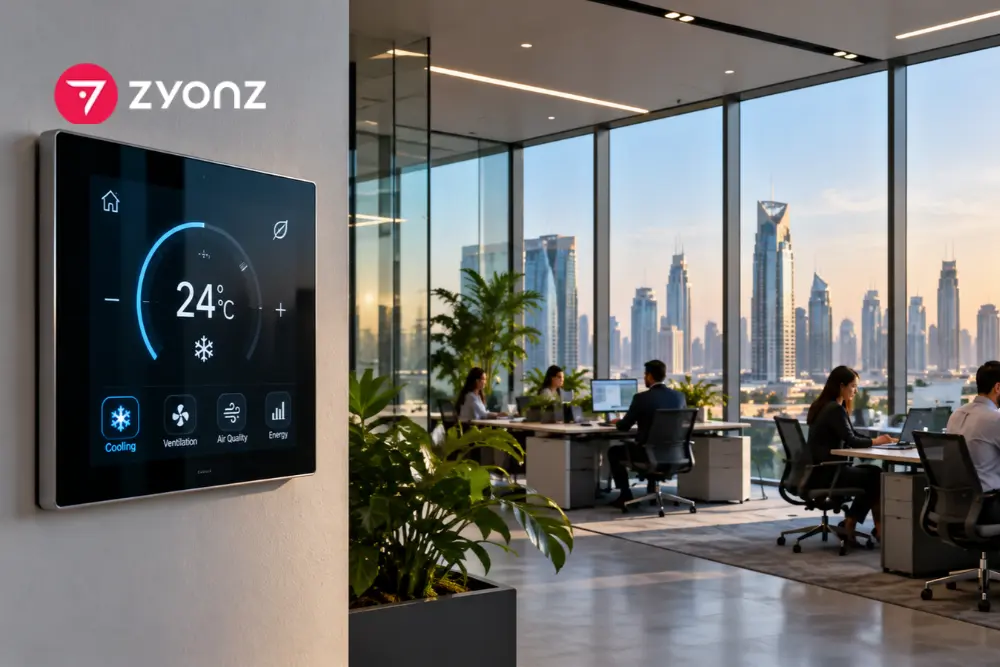
In Dubai, air conditioning runs almost all year in offices, hotels, shops, and homes alike. But a comfortable building doesn’t mean every cooling unit has to run flat out all day. Picture an office at 8 pm. Most people have gone home, and the meeting rooms are dark, yet the AC is still running as if it were midday. That’s electricity going into empty space. This is the problem HVAC building automation systems are built to solve.
They link your air conditioning equipment to sensors and automatic controls, so the system responds to what’s happening in the building instead of waiting for someone to adjust a thermostat. For property owners in the UAE, the aim is simple: keep people comfortable while getting better control over energy use, equipment, and maintenance.
What Does HVAC Building Automation Actually Do?
Traditional systems rely on thermostats, timers and manual settings. That’s fine for a small space. Across dozens of rooms or several floors, it quickly becomes hard to manage. Building automation puts all of those controls in one place. Temperature sensors read the conditions, occupancy sensors show which areas are in use, and controllers apply your programmed settings. Facility managers can then watch everything from a single screen.
A conference room that’s used for two hours a day, for example, doesn’t need the same cooling schedule as the rest of the floor. With the right controls, it won’t get one. Depending on the setup, the system can manage AC units, ventilation fans, chillers, pumps, dampers and more. It has limits, though. Results depend on the equipment you have, the settings you choose and how closely those settings match real use of the building.
Why Smart Climate Control Matters
Cooling demand here stays high for long stretches, while occupancy and heat loads shift through the day. A shop might peak in the evening and an office in the morning. In a villa, the bedrooms and living areas need different temperatures at different times. One fixed schedule can’t handle all of that.
Smart controls let each space follow its own pattern, which cuts unnecessary cooling in empty areas without making things uncomfortable for the people using the building. The value isn’t in having more technology. It’s in having more say over when, where and how cooling happens.
Five Ways Building Automation Makes a Difference
1. Cooling follows actual need
Without good controls, AC often keeps running in empty rooms and outside business hours. Automated schedules cut that waste, and occupancy-based controls add flexibility where the equipment supports them. Across a large office, even small scheduling improvements add up. How much you save depends on how the building was run before and how efficient the existing equipment is.
2. Every room can have its own settings
A sunny meeting room and an interior office rarely feel the same. Occupants, equipment and sunlight all change the temperature. Zoned controls let each area run to its own requirements, as long as the equipment supports it. That beats lowering the temperature for a whole floor just because one room feels warm.
3. Equipment problems show up sooner
Often an HVAC fault first appears as a complaint. A room takes too long to cool, or a unit keeps running without reaching its target. Monitoring software can flag these patterns early. It can’t diagnose every mechanical fault, but the data helps your maintenance team narrow down the cause and decide when to send someone out.
4. Ventilation gets more attention
Air quality matters as much as temperature. A building needs enough fresh air, and the cooling system has to keep humidity under control too. Depending on the design, automation can match ventilation to occupancy and sensor readings while maintaining the required fresh-air levels. In humid conditions, moisture control is especially important. The system has to be designed properly, and ventilation must still meet local regulations and building requirements.
5. Facility managers see the full picture
Think about a hotel with guest rooms, restaurants, corridors and service areas. Checking each unit one by one would take forever. A central management interface brings equipment status, temperatures, schedules and alarms together. Managers can spot recurring issues, review running hours and plan maintenance more sensibly. They can also tell whether the building is actually running the way it should.
Where Can HVAC Automation Be Used?
The right setup depends on the property and how people use it.
Commercial offices: Cooling follows working hours, with separate settings for meeting rooms and other areas.
Hotels: Guest rooms and shared spaces have very different occupancy patterns, so flexible control pays off quickly.
Retail outlets: Schedules can match store hours and the needs of different zones.
Residential properties: Homeowners can manage temperatures across bedrooms and living spaces, depending on the installed equipment. In larger homes, climate controls can also be linked with lighting and blinds.
For offices and hotels, smart glass installation is worth considering. Depending on the glass type, it reduces glare and direct sunlight, which eases the load on the cooling system. Choose integrations that solve a real problem. Don’t add features just because they’re available
What Should You Check Before Installing a System?
Start with an assessment of what you already have, not with a decision about which controller to buy. First, find out what equipment is installed. Older HVAC units may have limited communication options, while newer ones usually integrate more easily.
Then work out what you’re trying to fix. Is cooling uneven? Are units running after hours? Is your maintenance team struggling to keep track of equipment across floors? The answers will tell you how much automation you need. Check that your HVAC equipment, controllers, sensors and software are compatible. If other smart systems are part of the plan, their communication requirements should be considered early.
Finally, talk to the installer about commissioning, staff training, maintenance and network security. A system that’s hard to operate or maintain won’t deliver value for long. These systems depend on a stable network, so it helps to work with a hardware and networking company in Dubai that can plan the cabling, switches and network security alongside the HVAC controls.
Practical Tips for Better Performance
Even a well-designed system depends on how it’s set up and looked after.
- Position sensors carefully. Direct sunlight and nearby air outlets can skew readings.
- Set reasonable temperatures. An extra-low setting doesn’t cool a room any faster.
- Review schedules regularly. Business hours, occupancy and seasons change.
- Maintain the equipment. Dirty filters and neglected components hurt cooling performance.
- Measure results. Compare energy use and runtime before and after changes, allowing for weather and occupancy.
A common mistake is expecting automation to fix every efficiency problem. Poor insulation, wrongly sized equipment and blocked filters still need attention. Automation works best as part of a wider approach to running and maintaining the building.
Planning a Smart Automation Project in Dubai?
Better climate control doesn’t mean running the AC for longer. It means understanding how a building is used and adjusting the equipment to match.
HVAC building automation systems give property owners and facility managers a practical way to coordinate cooling, monitor equipment, and respond to changing conditions. With careful selection and proper maintenance, they make building operations noticeably more efficient. For commercial and residential properties in Dubai, the best starting point is a solution that fits the building, works with its existing infrastructure, and tackles real operational problems.
Planning a Smart Automation Project in Dubai?
Zyonz is a home automation company in Dubai providing smart technology solutions for modern residential and commercial spaces. Whether you’re planning a new automation project or want to connect existing systems, the right integration strategy makes all the difference.
Contact Zyonz to discuss your project and find the right smart technology for your property.
Your Questions Answered
Explore our frequently asked questions to find answers to common queries about our in Dubai. If you can't find what you're looking for, feel free to contact us for further assistance.
 Categories