- An ISO Certified Company
How Biometric Door Locks Are Changing Home Security
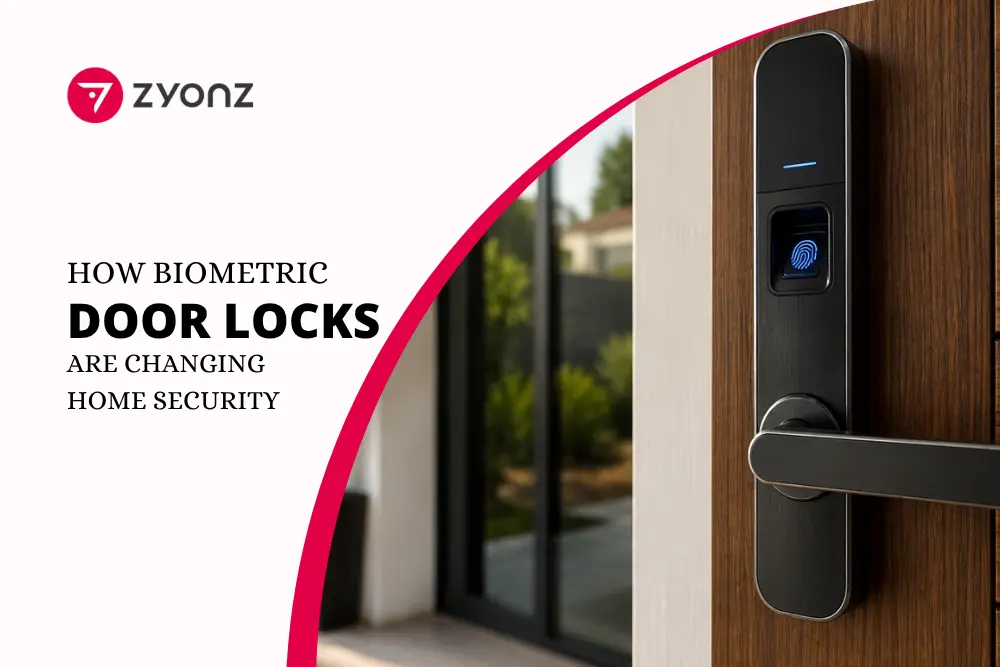
Ask anyone who has ever been locked out of their own house at midnight, and they will tell you keys are unreliable. They get lost in gym bags, left in yesterday's jacket, or copied by people you'd never expect. For decades, we accepted this as the cost of having a lock. But that's no longer the case.
Biometric door locks are quietly rewriting the rules of home security, and not in a small way. What used to feel like something out of a spy movie is now sitting on front doors across Dubai, protecting homes, apartments, and offices with technology that's faster, smarter, and far harder to fool than anything mechanical. Let's look at exactly how this shift is happening, and why it matters for anyone thinking seriously about protecting their property.
The Problem with Traditional Home Security
Before we get into what's changing, it's worth understanding what's broken. Traditional locks depend on physical objects, keys, cards, fobs. And physical objects have a fatal flaw: they can be lost, stolen, copied, or handed off without your knowledge. PIN codes aren't much better. They get shared with a cleaner, a contractor, or a curious teenager, and suddenly your "secure" code isn't so secure anymore. This is the gap biometric door locks are stepping in to close.
What's Actually Changing: The Shift to Biometric Access
Instead of relying on something you carry or remember, biometric systems use something you inherently are, your fingerprint, your face, sometimes your iris. This single shift changes the entire security equation.
Here's how the technology works in practice:
-
Enrollment – Your fingerprint, face, or iris pattern is scanned and stored as an encrypted digital template.
-
Scanning – Each time you approach the door, a sensor captures a live scan.
-
Matching – An algorithm compares that scan against the stored template within a second or two.
-
Access granted or denied – A match unlocks the door instantly. No match, no entry, no exceptions.
Because the system stores a mathematical representation of your data rather than an actual photo or fingerprint image, it's significantly harder for anyone to reverse-engineer or exploit.
Why This Shift Matters for Home Security
The impact goes beyond convenience. Here's where biometric technology is genuinely reshaping how homes stay protected.
1. Eliminating the Weakest Link: Physical Keys
Break-ins involving duplicated or stolen keys are more common than most homeowners realize. Removing the physical key from the equation removes an entire category of risk.
2. Creating Accountability Through Access Logs
Many biometric systems log every entry attempt, successful or not. This means you know exactly who came and went, and when, something a traditional lock could never offer.
3. Enabling Real-Time Alerts
Paired with a broader home security system in Dubai, biometric locks can send instant notifications to your phone the moment someone unauthorized attempts entry, turning your front door into an active security checkpoint rather than a passive barrier.
4. Supporting Remote Management
Forgot to grant access to a guest? Most systems let you manage permissions remotely through an app, no need to be physically present to control who enters your home.
Benefits That Go Beyond Basic Security
-
Faster entry – Scans typically complete in under two seconds.
-
No shared codes or duplicated keys – Your biometric data can't be handed off like a spare key.
-
Reduced break-in risk – Physical tampering becomes significantly harder.
-
Better integration – Works seamlessly with cameras, alarms, and smart home apps.
-
Increased property value – Modern security features are increasingly expected in premium homes.
For families managing multiple household members, or businesses with staff coming and going, this level of control is a meaningful upgrade over anything mechanical.
Are Biometric Door Locks Actually More Secure?
It's a fair question, and the honest answer is: mostly, yes, but quality matters enormously.
-
Fingerprints and facial structures are extremely difficult to replicate without specialized, expensive equipment.
-
Reputable locks encrypt biometric data locally rather than exposing it through unsecured cloud storage.
-
Most reliable models include backup access methods and tamper alerts for added protection.
The catch is that cheap, unbranded locks often skip proper encryption entirely, undermining the very security they promise. This is exactly why sourcing your system through an established home automation and security company in Dubai makes a measurable difference in long-term reliability.
Expert Tips for a Smarter Security Setup
-
Check accuracy ratings. Lower false rejection and false acceptance rates mean fewer frustrating errors.
-
Ensure offline functionality. A lock that fails during a Wi-Fi outage isn't protecting anything.
-
Choose weatherproof, IP-rated hardware for outdoor doors, especially in Dubai's heat and humidity.
-
Always maintain a backup entry method, whether a physical key or PIN override.
-
Get professional installation and calibration rather than attempting a generic DIY setup.
Common Mistakes Homeowners Make
-
Registering only one finger or angle – Injuries or lighting changes can cause failed scans without backups enrolled.
-
Skipping firmware updates – Manufacturers regularly patch security vulnerabilities.
-
Ignoring sensor maintenance – Dust and grime gradually reduce scan accuracy.
-
Choosing based on price alone – Budget models often compromise on encryption and build quality.
-
Treating the lock as a standalone solution – Biometric locks work best as part of a connected system, not in isolation.
The Bigger Picture: Biometric Locks as Part of a Connected Home
This is really where the shift is happening. Biometric door locks aren't just replacing old locks, they're becoming the entry point into a fully connected security ecosystem. A smart home automation company integrating biometric access with cameras, motion sensors, and smart alarms gives homeowners a single, unified system rather than a collection of disconnected gadgets.
That connectivity is what transforms a lock from a simple barrier into an active layer of protection, one that watches, records, and responds in real time.
Ready to upgrade your home's security?
The shift toward biometric door locks isn't a passing trend, it's a fundamental rethink of what home security should look like. Traditional locks were never designed for the connected, fast-paced world we live in now. Biometric technology closes that gap, offering speed, accountability, and integration that keys simply can't match.
Zyonz Technologies designs and installs smart biometric access systems tailored to your property, backed by expert consultation and reliable long-term support. Visit zyonz.ae to explore our solutions and take the next step toward a safer, smarter home.
Your Questions Answered
Explore our frequently asked questions to find answers to common queries about our in Dubai. If you can't find what you're looking for, feel free to contact us for further assistance.
 Categories